Producer Guide to
Slaughter and Processing
Everything producers need to know about scheduling, intake procedures, processing steps, timelines, and pickup requirements.
Table of Contents
Use the links below to jump to any step in the processing timeline.

Scheduling and Intake
Requirements
Scheduling and intake deadlines allow us to plan labor, USDA staffing, cut room capacity, and cold storage. All producers, regardless of size, must follow the required timelines to ensure we can process birds efficiently and maintain compliance.
- First-time customers: 50% deposit due within 7 days of receiving your Sales Order.
- Returning customers: 30% deposit due within 7 days of receiving your Sales Order.
- Late deposits: $35 fee applies
- No birds may be dropped off without a paid deposit
Booking Confirmation
You may request a booking by Intake form or over the phone.
- Then a sales order will be generated and sent to you for signature and deposit.
At booking, to hold a date, we will need to know
- Species
- Bird Count
- Air Chill or Ice Bath
Booking is confirmed only when your deposit is received from your sales order.
- Cut sheets must be completed on time
Bookings missing the required documentation
may be rescheduled or canceled.
Cut Sheets
Cut sheets must be submitted 31 days before your booking date
Missing this deadline means we will mark your lot for whole birds
- A $100 Administration Fee applies if you later want to add a cut sheet after the cutoff
Operational issues on your farm do not waive this requirement
Accurate information is essential for planning our labor, equipment, cut room time, and USDA inspector scheduling. Final flock counts, cut choices, deboning needs, and grinding volumes dramatically change our production flow. Last-minute changes or missing information disrupt scheduling for every producer after you.
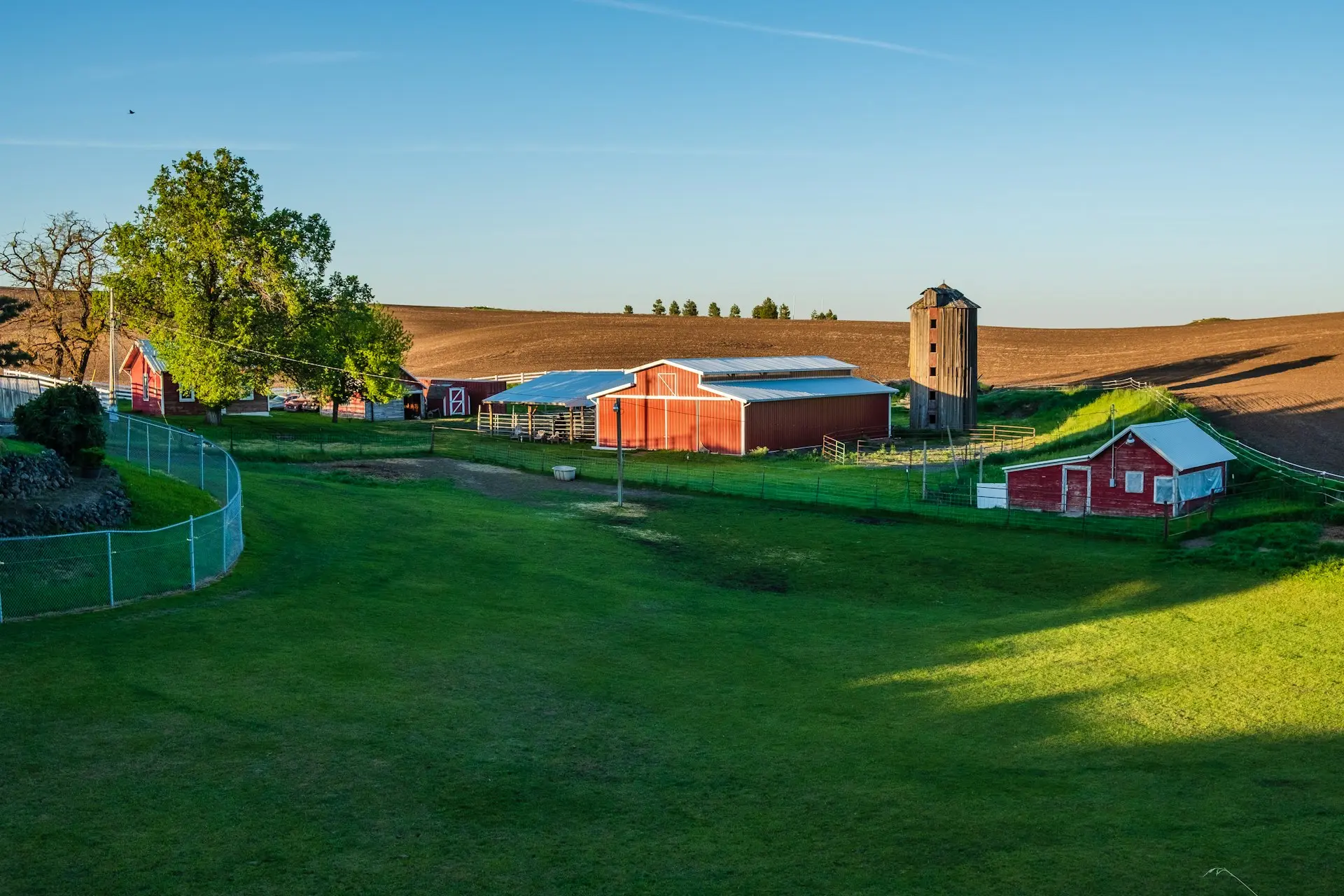
Preparing on Your Farm
Proper preparation on your farm the day before your appointment keeps birds calm, reduces stress, and ensures they arrive in the best condition for processing. Following these steps also helps us maintain efficiency, humane handling standards, and USDA compliance when your flock enters the facility.
Feed & Water Management
- Birds must be off feed for 12 hours before arrival
Birds must have full access to water until crating
- Do not remove water early; they need the water to move the feed out of the crop and might decline in heath during travel if water is removed to early.
Crating & Handling
- Use clean, secure crates appropriate to bird size
Do not exceed 6–8 birds per crate, depending on weight. Crates should be 50lbs or lighter.
- Overstuffed crates incur additional separation fees
Crates should be labeled with Farm Name or Personal Last Name
- We will label crates with tags if not labeled for $1 per crate.
Don't own poultry crates? We will rent crates $7/per crate,
when planned ahead of time
Let us know as soon as possible to schedule rental needs.
Health & Condition
- Remove any obviously sick, injured, or non-ambulatory birds
- Dead on arrival (DOA) birds are still charged for slaughter
- Birds with visible defects may require rework and incur rework fees
Departure and Arrival Readiness
- Use wind breaks to block high speed wind from killing birds, but don't cover crates taking away airflow.
- Know your bird count
Plan to bring the staff needed to unload your flock.
- Don't have the staff, that's ok we can schedule one of our staff members to assist you. $25
- Don't have the staff, that's ok we can schedule one of our staff members to assist you. $25
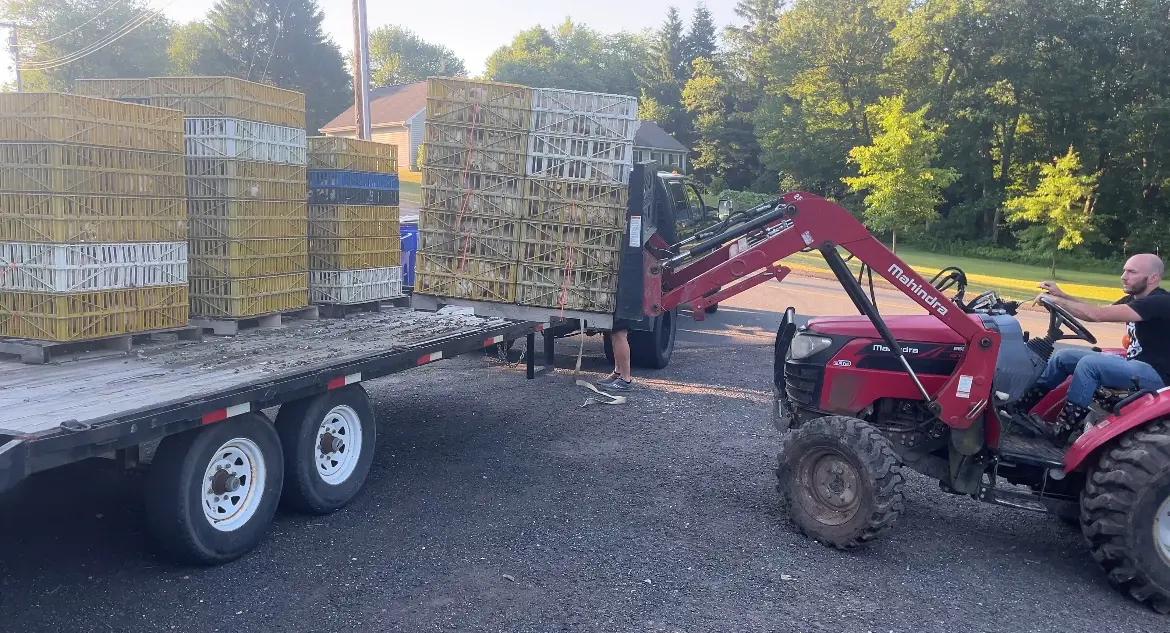
Day-of Drop-off
The drop-off window is tightly scheduled to keep the production line moving, maintain humane handling standards, and meet USDA inspection requirements. Arriving prepared and on time ensures your birds can be received efficiently and prevents delays for every producer after you.
Intake Procedures
Palletized Crate Unloading
- If you plan to arrive with palletized crates to be unloaded by our forklift operator, we must be notified in writing (email) at least 1 week before your appointment.
- Palletized customers are unloaded according to staff direction and facility flow.
- If you do not provide advance notice, you will be required to unload your flock manually.
Forklift unloading availability is based on advance notice and operational capacity.
Arrival and Check-In
- Receiving begins at 6:30 a.m.
- Late fees apply at 7:00 a.m.
- If staff are not present at the road when you arrive, call (860) 302-7847 to notify the facility.
- A doorbell is also located near the gate entrance for check-in.
Biosecurity Requirements
- Remain in your vehicle until biosecurity tire spray has been applied.
- Follow staff directions before backing onto the property.
- Before stepping out of your vehicle, request that your boots be sprayed to protect both your farm and ours.
Manual Crate Unloading
- If you are not palletized, it is your responsibility to unload crates where the Facility Manager or designee directs.
- Bring enough staff to unload your flock safely and efficiently.
- Our staff will direct traffic and intake flow, but do not unload birds, unless you've scheduled assistance in advance. ($25)
Order of Unloading
If your flock is not large enough to occupy the entire day, unloading occurs in one of two ways:
- In the order farms arrive
- OR in the order required by the Facility Manager to meet operational needs
- This ensures smooth intake, staffing efficiency, and compliance with USDA workflow.
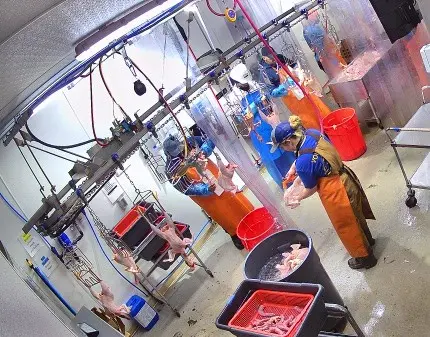
Behind the Scenes: Our Processing Workflow
Once birds enter the facility, every step of processing follows a tightly controlled sequence designed to maintain food safety, humane handling standards, and USDA compliance. Understanding this workflow helps explain why accurate information, advance planning, and firm deadlines are essential for efficient processing.
How Birds Move Through the Facility
- Slaughter is conducted under continuous USDA inspection.
- Birds move through electrical stunning, humane slaughter, scalding, plucking, and evisceration in a controlled flow to prevent cross-contamination.
- Carcasses are immediately chilled using your selected method (air chill or ice bath).
- Processing order is determined by species, volume, and downstream cut room requirements.
Weighing, Yield, Packaging, and Labeling Overview
- Birds are weighed after chilling to determine final dressed weight.
- Yield varies based on bird size, cut selection, deboning, and grinding choices.
- Whole birds, cut-up birds, deboned product, and ground product each require different labor and time.
- Packaging type (retail packs, value packs, family packs, or case-packed wholesale) affects production flow.
- Labels are applied according to USDA requirements and match your approved processing selections.
Why This Matters for Your Booking
Cut choices, deboning, grinding, and packaging all extend processing time beyond slaughter day. Larger or more complex orders may require multiple days to complete, especially when fresh product timelines must be maintained before freezing. This is why final details must be confirmed in advance and cannot be changed at drop-off.
Quality and Compliance Steps We Take
- Continuous USDA inspection is maintained throughout slaughter and processing.
- Humane handling standards are enforced at every stage.
- Sanitation procedures are performed between production stages as required.
- Product temperatures are monitored to maintain cold chain integrity.
- Any birds requiring rework to meet USDA standards are addressed before release.
Pickup or Delivery
Once processing is complete, product release is scheduled to maintain cold chain integrity, facility flow, and staff availability. Pickup and delivery timelines are firm to ensure food safety and allow production to continue for the next scheduled customers.
Pickup Windows and Release Procedures
- Pickups are Friday Evenings 5pm (November Turkey will be different)
- All balances must be paid in full before product is released.
- Product is released only during scheduled pickup windows when staff are available.
- Arriving early or late without notice may result in delays or additional fees.
Cold Chain and Transportation Requirements
- All product must remain at 40°F or below during transport.
- Customers are responsible for proper refrigerated vehicles, ice, or freezer transport.
- Product may not be released if cold chain requirements cannot be met.
- Once product leaves the facility, responsibility for temperature control transfers to the customer.
Delivery and Logistical Services
Delivery options may be available for qualifying orders based on volume and location.
• Delivery scheduling must be arranged in advance and confirmed in writing.
• Delivery fees, minimums, and timelines vary based on route availability.
• Product delivery transfers custody at the point of receipt.
Late Pickup and Cold Storage Fees
- Pickup windows are precise. Staff are not available outside scheduled release times.
- If you notify us and provide an ETA, late pickup fees may apply based on staff availability.
- Failure to arrive without communication will result in cold storage fees per case, per day.
- Repeated late pickups may affect future booking eligibility.
Final Notes
Processing timelines vary based on volume, cut complexity, and downstream processing needs. Planning transportation in advance ensures your product is released on time and maintains food safety standards.

Final Steps and Next Appointment
Completing your pickup marks the end of one processing cycle and the starting point for planning the next. Clear communication after your appointment helps ensure accurate records, smoother future bookings, and priority access during high-demand periods.
How to Place Your Next Booking
- Future bookings may be requested through the intake form or by contacting the facility.
- Returning customers are encouraged to book early, especially for peak seasonal dates.
- Booking requests are not confirmed until a sales order is issued and the required deposit is received.
- Seasonal volume customers should confirm remaining dates and projected volumes as early as possible.
Seasonal Considerations
- Processing capacity varies throughout the year based on species, volume, and cut complexity.
- Peak season dates fill quickly and may have limited flexibility for changes.
- Multi-day processing needs (cut-up, deboning, grinding) affect calendar availability.
- Early planning ensures better scheduling options and operational efficiency.
Feedback, Adjustments, and Follow-Up
- Questions or feedback should be submitted after pickup, not during intake or release.
- Any concerns about weights, packaging, or invoices should be communicated promptly after pickup.
- Adjustments to future bookings should be requested as early as possible to avoid fees or rescheduling.
- Last-minute changes may not be accommodated once production planning is complete.
Closing Note
This guide is designed to provide clarity, consistency, and fairness for all producers. Following these procedures allows us to maintain humane handling standards, USDA compliance, and efficient processing for every customer we serve.
Ready to Request Slaughter & Processing?
Contact us today to work with a team delivering the promise, with integrity in every bite and pride in every flock.