If you will not sell at the average, you are telling your customer the bird is average — and they will believe you long before they believe your website.
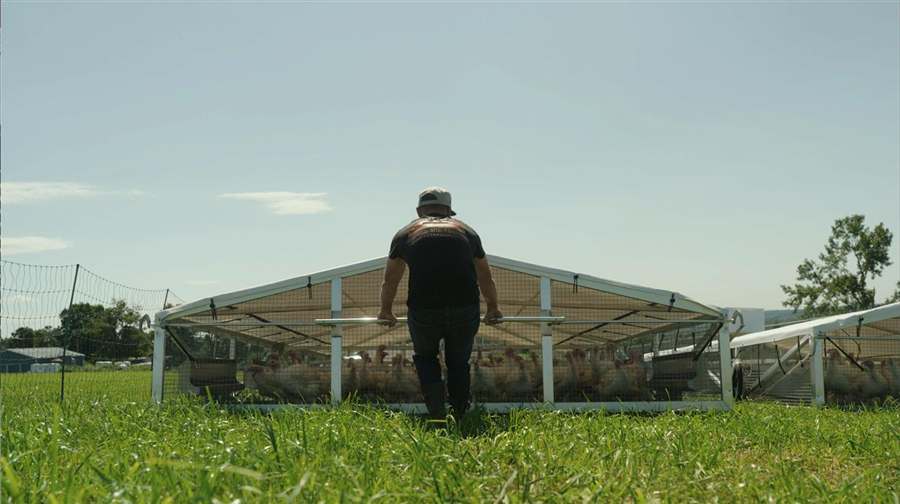
USDA's Agricultural Marketing Service publishes a report most producers in this region have never opened: the National Pasture Raised Poultry Report. It collects direct-to-consumer prices from 66 pastured producers and publishes them by cut — low, high and average. The current edition covers April through June 2026.
It is the closest thing that exists to a price sheet for what we all do. And the first thing it shows has nothing to do with cuts. It is how far apart we all are.
What the range is really telling you
Same product, very different prices
A whole pastured chicken averages $7.47 a pound sold direct. That average sits inside a reported range of $4.50 to $16.99.
The data
| Item | Low | Average | High |
|---|---|---|---|
| Whole chicken | $4.50 | $7.47 | $16.99 |
| Breast, boneless | $10.25 | $15.76 | $24.20 |
| Ground | $10.00 | $14.73 | $22.99 |
| Sausage | $8.00 | $14.85 | $22.67 |
| Turkey — whole | $4.99 | $8.53 | $13.99 |
| Turkey — Ground | $10.00 | $13.81 | $20.00 |
Those are not different birds. Nobody in that range is raising something eleven dollars a pound better than everyone else. It is the same product, and the spread is a record of how differently we each decided to price it.
The costs that never make it into the number
Where pricing usually goes wrong
Ask most producers how they set a price and you get a version of the same answer: they looked at what the shop down the road was charging, looked at what feed cost, and picked something defensible in between.
Here is what that method leaves out. Fuel and wear on the truck that hauls the crates. Hours on the tractor moving pens. The drive to the processor and the drive back to collect. The freezer that runs all winter whether it is full or not. The packaging, the labels, the market fees, the Saturday you did not spend at home. And the one almost nobody counts: your own wages. Not profit — wages, for the hours you personally worked.
Put a number on it. The gap between the lowest reported price and the average is $2.97 a pound. On a 4.5-pound bird across a 1,000-bird season — use your own figures — that gap is $13,365. That is not margin. For most operations that is somebody's wage, and right now it is going unbilled.
You are not in the same business as Costco
Who your customer actually is
Walmart, Amazon, BJ's and Costco are running a race to the bottom on price, and they are very good at it. That is a volume business built on buying power you will never have and should not want. A conventional whole bird advertised in Northeast supermarkets this month averaged $1.12 a pound.
The data
| How it is sold | $/lb |
|---|---|
| Conventional | $1.12 |
| Antibiotic Free | $1.74 |
| ABF, Free Range | $2.29 |
| ABF, Pasture | $3.99 |
| Pastured, sold direct | $7.47 |
You are not competing in that race, and every time you price as though you are, you lose ground twice: once on the margin, and once on what the price says about the bird.
What New England actually has is a customer base most of the country would envy — people who will pay the top of that range for service, consistency and trust. They want to know the farm. They want the same bird to be the same bird in October as it was in July. They want to ask a question and get a real answer from the person who raised it. That is worth real money, and it is the part Costco cannot copy at any price.
One more thing worth saying plainly. This report is a baseline for pastured birds and nothing more. If you are also farming organically — certified or not — regeneratively, to a humane standard, rotating hard, feeding better than you have to, then you are already above the baseline this data describes. Your price should say so, because the report will not say it for you.
Then there is what happens after the kill floor
Cut versus convert
The same report shows what each cut returns, and it is more specific than "value-added pays."
The data
| Item | Avg $/lb | Multiple of whole bird |
|---|---|---|
| Tenders | $17.01 | 2.28× |
| Breast, boneless | $15.76 | 2.11× |
| Thighs, boneless | $15.61 | 2.09× |
| Sausage | $14.85 | 1.99× |
| Ground | $14.73 | 1.97× |
| Breast, bone-in | $12.40 | 1.66× |
| Thighs | $11.42 | 1.53× |
| Leg Quarters | $9.34 | 1.25× |
| Spatchcocked | $8.66 | 1.16× |
| Cut into pieces | $7.58 | 1.01× |
| Wings | $7.52 | 1.01× |
| Whole chicken | $7.47 | 1.00× |
Cutting a whole bird into pieces takes it from $7.47 to $7.58 — about eleven cents a pound for real labour. Spatchcocked it reaches $8.66. The step-change is elsewhere: boneless breast averages $15.76, tenders $17.01, ground $14.73 and sausage $14.85. Roughly double, for taking the bird apart and putting it back together as something else.
And look at the bottom of that chart. Backs and frames — what most producers bin — average $4.69 a pound. As broth, the same material averages $14.43 a quart.
What we found when we went looking
Our 2024 research, and what it changed
In 2024 we put a Connecticut Department of Agriculture grant into a research project on chicken: what was actually growing, and what would actually sell. Two findings. Demand for local chicken was rising, not levelling off — two years on, the market has proved that right. And the products with the most room in them were not whole birds. They were value-added: sausage, stock, prepared items made on the farm the bird came from.
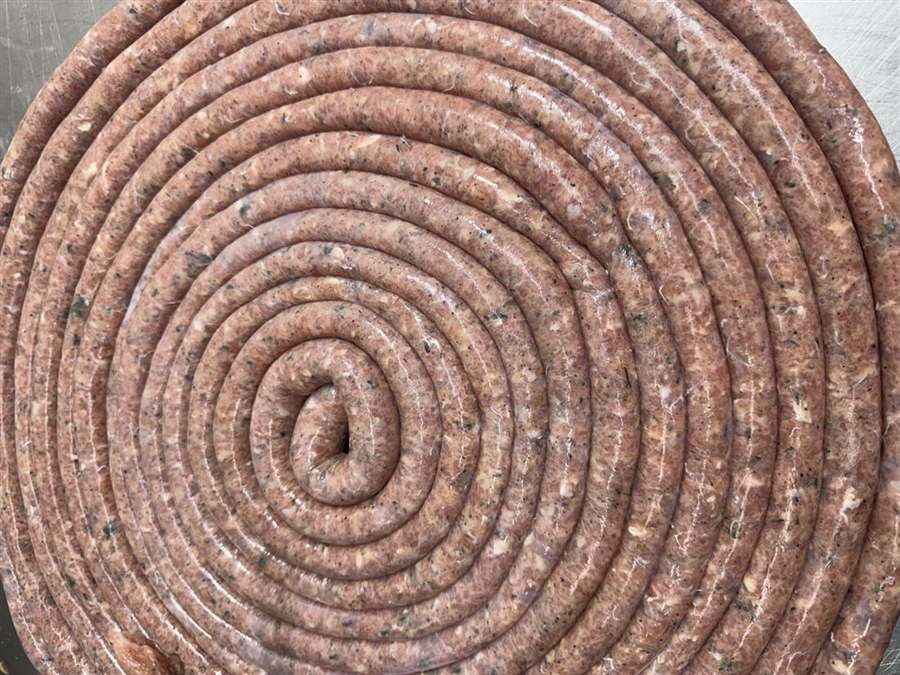
We backed our own finding. Our chicken sausage retails at $15.50 a pound and our turkey sausage at $19.25, and we move 40 pounds of chicken sausage or more at market on a normal weekend. Every season since we have put money into equipment and added more value-added capacity, because the research said to and the sales kept agreeing.
Turkey, and why this is the week
Birds are going to grass right now
This is not a footnote. Most turkey producers in this region have poults in the barn about to go out to pasture, half of them are posting photographs of it, and slaughter dates are either booked or being booked this month. What a lot of those farms have not done yet is publish a price.
Do that now, before the birds are on grass and the questions start. Whole pastured turkey averages $8.53 a pound sold direct, with the reported range running to $13.99.
Here is what the top of that range looks like in practice. A New England producer who ships frozen whole birds for Thanksgiving opened pre-orders this week at $13.75 a pound — $10.75 if you commit in the early window. That is well clear of the national average, and they will very likely outsell farms charging half of it, because an early pre-order at a confident price is a better offer than a cheap bird nobody has committed to. Steadfast will be pricing above the national average again this year.
While you are at it, look at your deposit. The national average is $50 a bird, with a reported range of $25 to $75. A deposit is not a price rise. It is how you stop absorbing the cost of somebody who changes their mind in the third week of November.
Feed is cheap and birds are dear
Numbers that moved — latest data June 2026
The data
| Series | Jan 2021 | Peak | Latest | Change since 2021 |
|---|---|---|---|---|
| Broilers, farm-gate | 100 | 230 (2022-05) | 160 | +60% |
| Turkeys, farm-gate | 100 | 165 (2022-10) | 159 | +59% |
| Chicken & turkey feed | 100 | 137 (2022-09) | 107 | +7% |
Indexed to January 2021, farm-gate chicken sits at 160 and turkeys at 159, while chicken and turkey feed sits at 107. Corn has fallen to 78, below where it was in early 2021, and soybean meal to 82. Grain is cheap and birds are dear — though prepared feed has not fallen as far as its ingredients, so if you buy by the ton that gap is worth raising with your mill before you book autumn deliveries.
The Call
Decide your price before the fall rush decides it for you
Set your published price now, at or above the average for what you actually do, and build the number from your real costs — including your own hours. Producers who wait until birds are on the ground end up pricing against whoever posted first, which is how a whole region drifts toward the bottom of a range it never needed to be in.
Then look at what will not sell as a whole bird. Those are the birds to convert rather than discount, and the quiet time to do it is December and January, when the fields are empty but the freezers are not.
What to do with this
Four practical steps
Find your own number in the chicken range. Put what you charged for a whole chicken last season against $4.50 to $16.99. If you are in the bottom third, you are not undercutting your competitors — you are underselling the whole category, including the farms either side of you.
Add up what you actually spend. Truck, tractor, fuel, freezer, packaging, market fees, processing, and your own hours at a real wage. Then set the price. Most producers discover their old number did not cover the list.
Stop cutting birds up and calling it value-added. Eleven cents a pound does not pay for the knife work. Debone it, grind it, or make something out of it.
Put a number on your frames. Backs and bones average $4.69 a pound as they are, and $14.43 a quart as broth. Work out how many quarts your flock represents before you throw another one away.
Book the fall, and book the freezer work
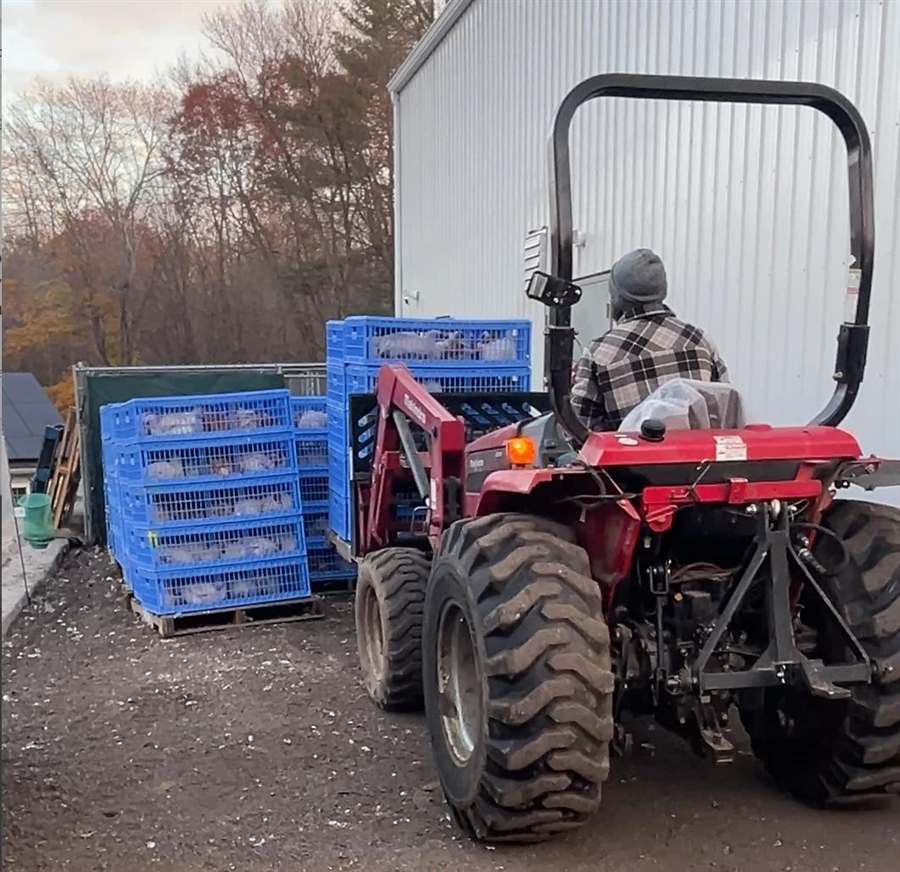
Steadfast Farms is a USDA-inspected poultry plant in Bethlehem, Connecticut, slaughtering and processing chicken and turkey for farms across New England. USDA inspection means the birds you bring us can be sold retail, wholesale and across state lines.
If you are sitting on whole birds and cuts you would rather sell as sausage, ground, stock or prepared items, that is a conversation to have before the autumn rush rather than during it — and December and January are the months with room in them. Tell us what you are holding and what you want off the line, and we will work the cut sheet backwards from there.
Book processing and value-addedSources & method
- USDA AMS, National Pasture Raised Poultry Report, 2026 Quarter 2 (April–June), released 26 June 2026. Direct-to-consumer prices reported by 66 pastured producers nationally. National figures; the series carries no Northeast breakout. Next release 25 September 2026.
- USDA AMS, National Retail Report — Chicken (AMS_2756), week of 20 July 2026, Northeast region (CT, DE, MA, MD, ME, NH, NJ, NY, PA, RI, VT). Supermarket figures are advertised feature prices and sit below normal shelf prices; they describe stores that report to the survey, not the whole market.
- U.S. Bureau of Labor Statistics, Producer Price Index series WPU014102 (chickens, farm-gate), WPU0142 (slaughter turkeys), WPU02930102 (chicken and turkey feed), WPU012202 (corn), WPU0292 (soybean cake and meal). Latest observation June 2026.
- Steadfast Farms' own retail prices and the Thanksgiving pre-order example are as at July 2026. Every AMS average quoted here falls inside its own published low–high range, checked on extraction. Supermarket and direct-to-consumer prices are different measures and are labelled separately throughout.