HACCP Drives Food Safety
HACCP Drives Food Safety
At Steadfast, HACCP is the written food safety system behind slaughter and processing under USDA FSIS inspection. In the master document, that system covers slaughter, voluntary slaughter, raw intact processing, and raw non-intact processing. FSIS verifies the written plan and the records that prove it was followed.
haccp is preventive control
Hazard Analysis and Critical Control Points is a proactive, systematic approach to food safety. It addresses physical, chemical, and biological hazards by analyzing each step in the process, identifying hazards, and establishing control measures. A Critical Control Point is a step where control can be applied and a food safety hazard can be prevented, eliminated, or reduced to an acceptable level. HACCP does not wait for failure. HACCP controls risk before product is lost and before unsafe product moves forward.
haccp does four things
- Identifies hazards
- Establishes control
- Sets limits and monitoring
- Requires corrective action and records
Steadfast follows
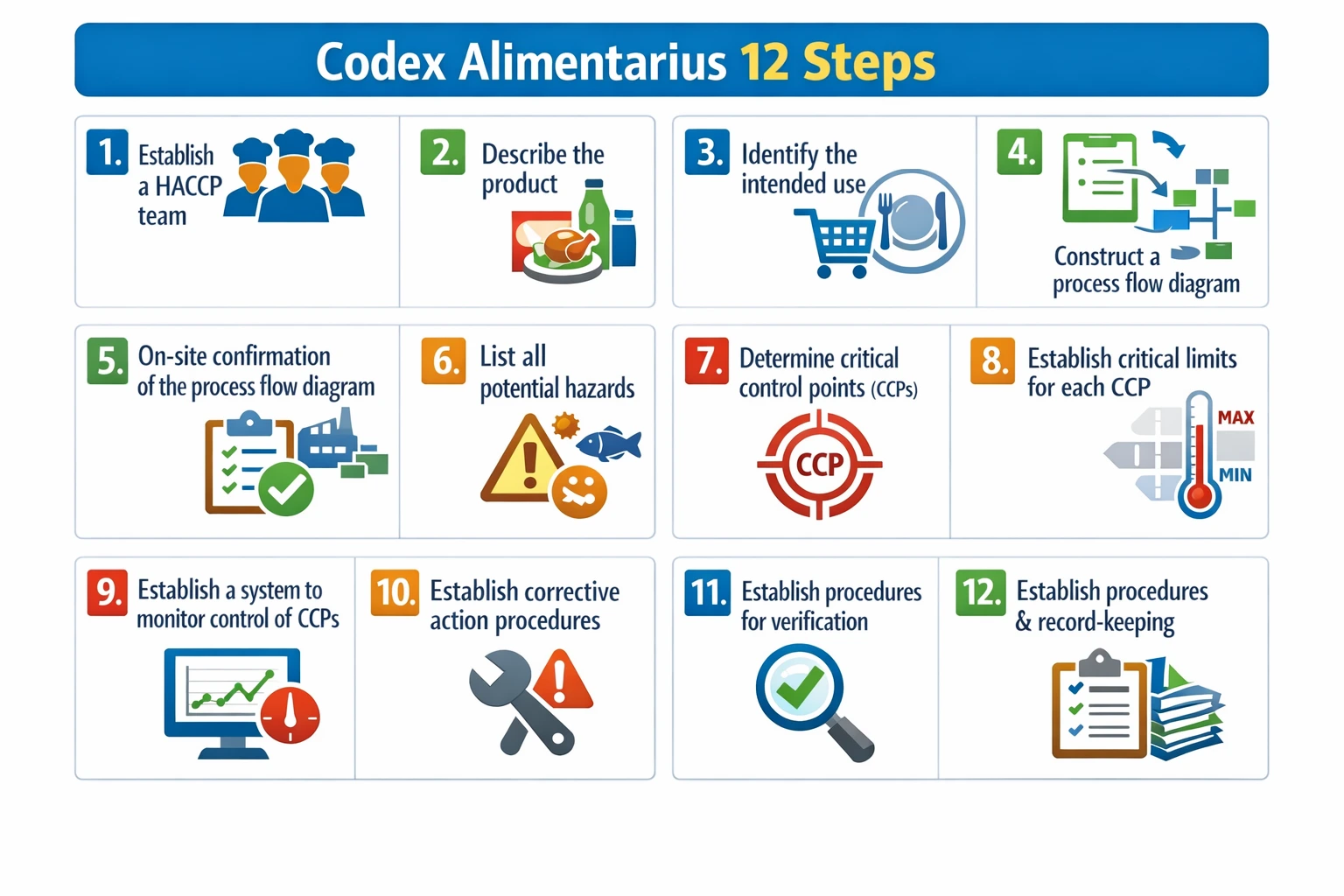
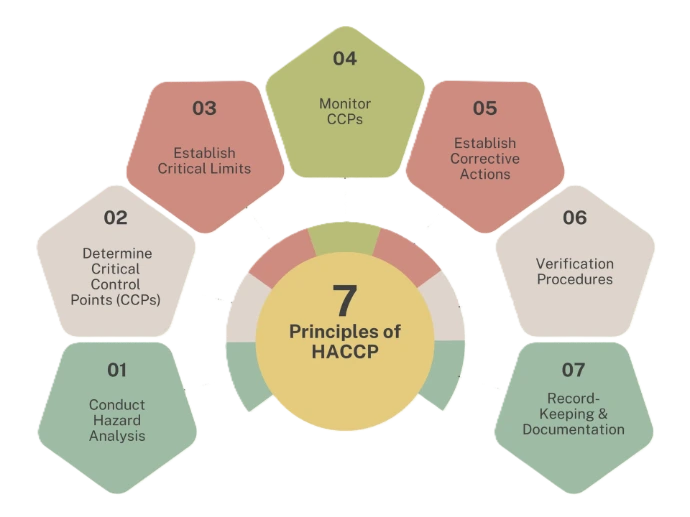
The Codex haccp framework
The Steadfast training program states that company policy follows Codex Alimentarius’s 12 Steps and 7 Principles. That framework matters because the HACCP plan is not a loose collection of forms. It is a structured system for hazard analysis, CCP determination, critical limits, monitoring, corrective action, verification, and recordkeeping. This is the framework behind the written Steadfast plan.
The written plan
controls this facility
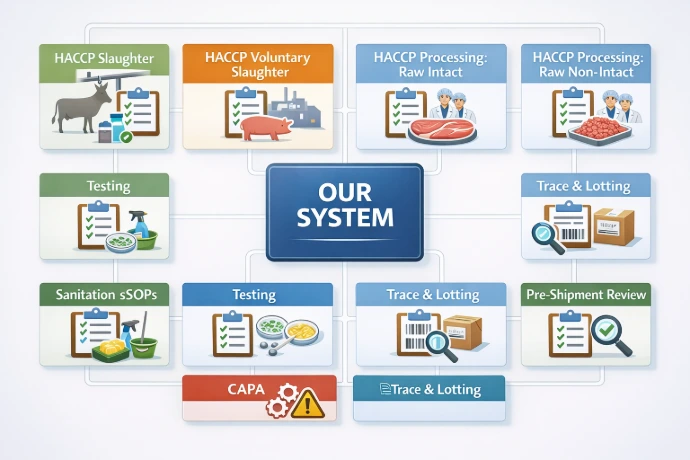
The master document shows how Steadfast applies HACCP in real operations. The HACCP Program includes slaughter, voluntary slaughter, raw intact processing, and raw non-intact processing. The broader Food Safety Program also includes sanitation SOPs, prerequisite programs, testing, CAPA, receiving and storage, pre-shipment review, trace and lotting, recall, and recordkeeping. HACCP drives food safety here because the written plan controls the process, and the supporting programs hold the process in place.
The plan assigns responsibility
The master HACCP plan assigns responsibility in writing. The Director of Food Safety and Quality creates the HACCP Team. The Director of Operations institutes and trains the HACCP Plan. All Steadfast personnel are responsible for following the HACCP Plan and food safety. When deviations occur, corrective action and/or on-the-spot training follows. The Facility Manager carries daily execution inside that system and holds the room to the written standard.
The plan is written. The standard is set. The job is execution.
Build
the Team
Institute and Train the Plan
Execute
the Plan
On the Floor,
Food Safety Is Control
On the floor, food safety is not theory. Food safety is hazard analysis behind the work. Food safety is CCPs checked to the written limit. Food safety is monitoring completed when required. Food safety is corrective action taken when control is lost. Food safety is verification performed on schedule. Food safety is records that connect production, product status, and release.
The Facility Manager runs that system, verifies it, and defends it.
There are no comments for now.
to be the first to leave a comment.