Use the Master Document
Use the Master Document
The Food Safety Program Master Document is the written standard for this facility. It is the approved structure behind sanitation, HACCP, prerequisite programs, testing, CAPA, pre-shipment review, traceability, recall, recordkeeping, and labels. The manager who uses this document correctly does not guess, does not drift, and does not run the room from memory.
The Master Document
Is the Written Standard
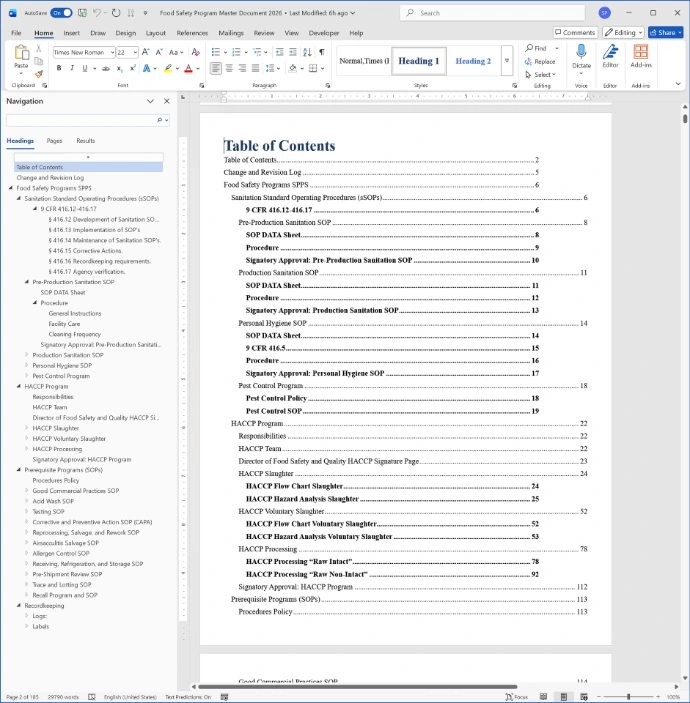
This document is not a reference binder and it is not background reading. This document is the written standard that governs how Steadfast runs food safety.
The table of contents lays out that control structure in order: sanitation sSOPs, the HACCP Program, prerequisite programs, testing, CAPA, receiving and storage, pre-shipment review, trace and lotting, recall, recordkeeping, and labels.
The Document
Is Built to Be Used
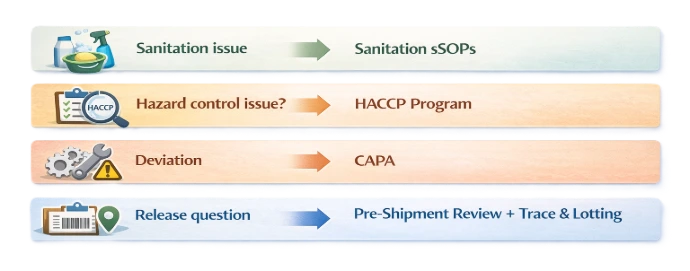
The master document is organized to be navigated. When sanitation is the issue, the sanitation sSOPs hold the answer. When hazard control is the issue, the HACCP Program holds the answer. When the issue involves testing, CAPA, pre-shipment review, traceability, recall, or records, those sections are already built into the system.
You do not need to memorize every page. You needs to know when the room is aligned with the written standard and when execution has drifted from the SOP or HACCP flow.
You needs to know where the answer lives and how to use the document to justify or correct what is going on.
Controlled Sections
Follow a Pattern
The master document is structured on purpose. Across the system, controlled sections repeat a pattern:
- SOP DATA Sheet
- CFRs (Code of Federal Regulations) references where applicable
- Procedure
- Signatory Approval
- Implementation / Revision History
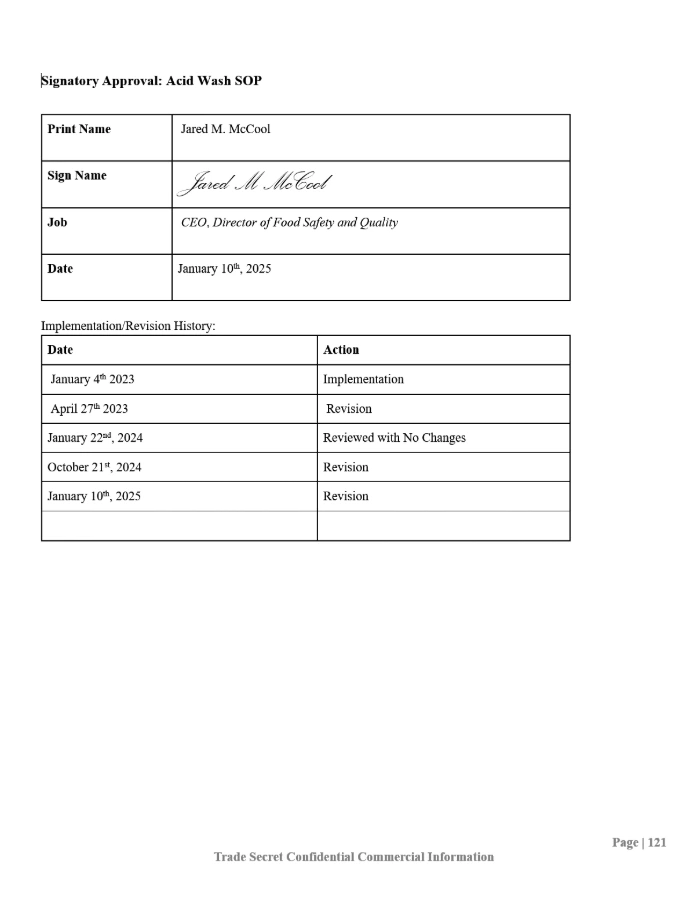
The pattern matters because it tells the manager where to find scope, purpose, requirements, responsibilities, generated documents, operating steps, and revision history without hunting through the page. The document is easier to use when the pattern is understood before the room needs an answer.
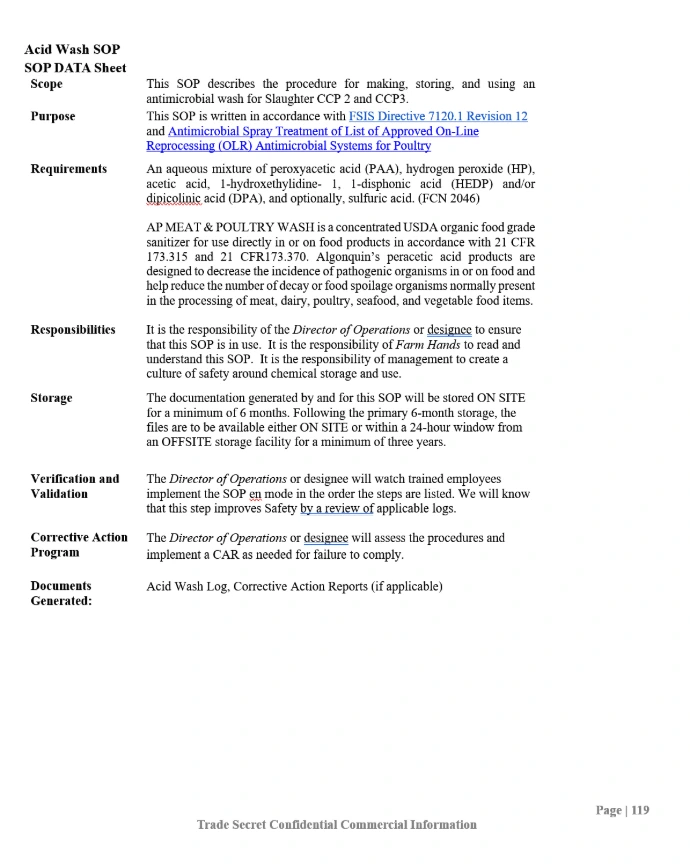
Examples Below: (left: a SOP Data Sheet, right: a signatory approval page)
Change Is Controlled
The master document is a living document, but it is not a casual document.
Change is controlled
The Change and Revision Log exists to make revisions easy to find, and the document states that changes are still signed and dated in the Signatory Approval: Implementation / Revision History section of the SOP.
The Procedures Policy also states that SOP updates are communicated after implementation or change and through refresher training and meetings as necessary.
At Steadfast, that means a change is evaluated before it becomes the new standard, temporary controlled changes are documented, FSIS awareness is maintained, and full implementation requires update, signoff, and communication across the operation.
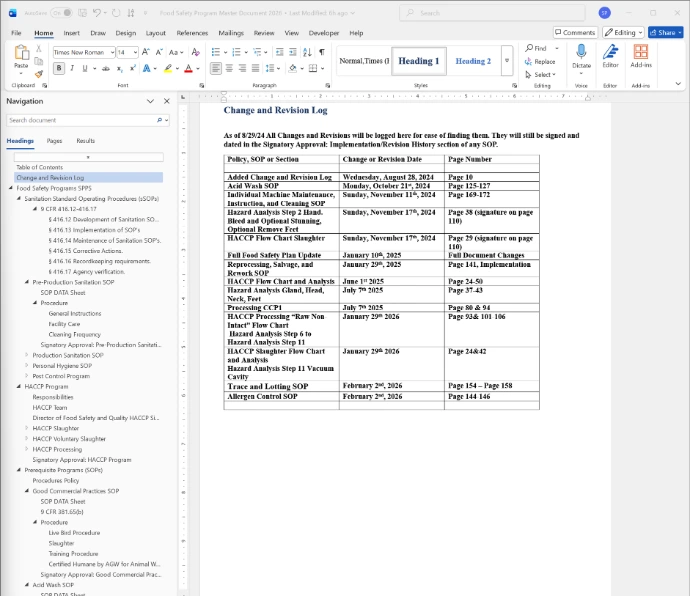
Ambiguity Must Be Understood
Some language in the master document is broad on purpose. That gives Steadfast room to operate within the written standard when slight variation does not change control of the process or the product.
That flexibility can be useful in real production.
It can also create questions. When the written standard leaves room for interpretation, FSIS has more opportunity to ask what the standard is, how it is controlled, and whether execution is still consistent.
Questions slow production.
Ambiguity only works when the room understands the limit of the variation, stays inside the written standard, and knows when the document needs to be tightened through controlled change.
Not Every Variation
Is a Change
The written standard controls execution. When the SOP is broad on purpose, the work can vary within the written standard. When the SOP is specific, the work must match the written standard exactly. That is the discipline.
The facility does not invent its own version of compliance.
The facility works from what is written.
If the written standard said the plucker had to be operated while standing on one foot, that is the standard. If it did not specify which foot, either foot meets the standard. If it specified the right foot only, the right foot is the standard. Written standards control execution.
Work from
the Current Written Standard
Steadfast uses SOPs and work instructions to define “how we do it here.” Staff is trained to SOP competence. SOPs are made available in paper, reference manual, or electronic format, and updates are communicated after implementation or change.
You are expected to work from the current written standard every day and make sure the room is working from the same standard.
That is how execution stays aligned from owner to hourly operator.
Every Role Makes The Whole
Food Safety is Everyone's Responsibility
There are no comments for now.
to be the first to leave a comment.